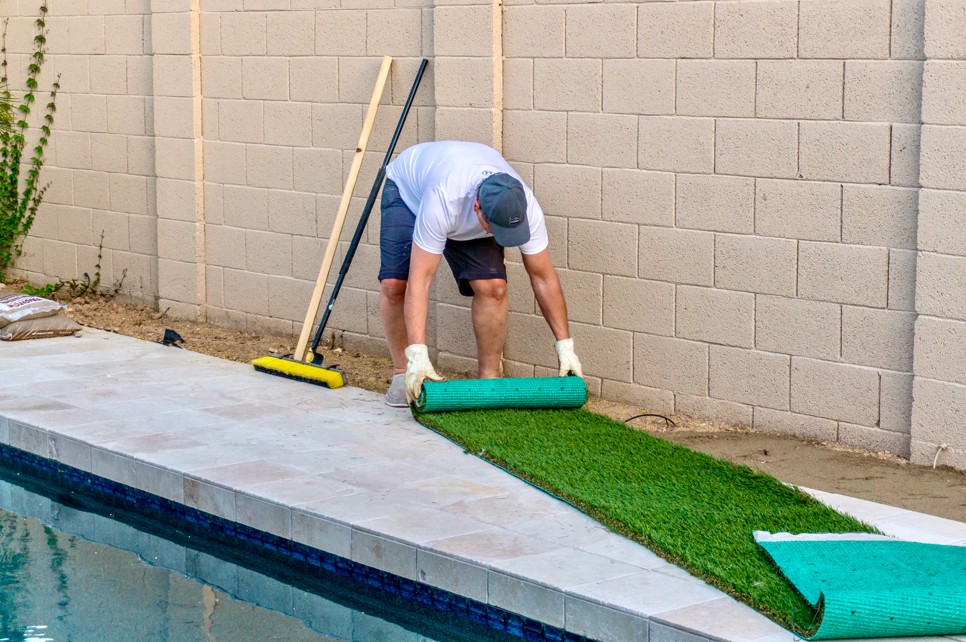
Whether you are transforming a commercial showroom in Sevierville or preparing a residential pool deck for a Gatlinburg wedding, the aesthetics of lush greenery against a clean concrete finish are undeniable. However, in the Smoky Mountains region, where high humidity and temperature fluctuations are the norm, the method you use to secure that turf is critical to ensuring safety and preserving your structural investment. On our job sites in Gatlinburg, we’ve found that many clients worry about ruining a high-quality concrete finish with permanent adhesives, which is why a temporary, non-destructive approach is often the superior choice.
Professional Consultation: If you are planning a large-scale event or need guidance on integrated site preparation for mountain properties, contact our team at (865) 365-4086 or Request a Proposal to discuss your site plan with a concrete specialist.
Key Insights for Sevier County Projects
- Avoid Permanent Glue: For event-based turf, standard construction adhesives can cause permanent staining or “ghosting” on the concrete surface.
- Moisture Management: High-altitude environments in the Smokies can lead to condensation under turf; temporary tape allows the concrete to breathe better than full-spread glue.
- Surface Prep is King: Just like pouring 4,000 PSI commercial concrete footers, the bond is only as good as the cleanliness of the substrate.
Technical Navigation
- Essential Supplies for Professional Turf Installation
- Step-by-Step Technical Execution
- Post-Event Removal and Concrete Care
- Structural Summary & Compliance
Essential Supplies for Professional Turf Installation
To ensure a professional-grade finish that resists tripping hazards and stands up to Pigeon Forge foot traffic, you need more than just a roll of grass. We recommend the following kit for any East Tennessee event space:
- Heavy-Duty Industrial Broom: To clear laitance and debris from the concrete.
- Artificial Turf Runner: Lightweight and portable for rapid deployment.
- Heavy-Duty Double-Sided Tape: Designed for high-shear resistance.
- Duct Tape (Reinforcement Layer): Used as a sacrificial barrier to protect the turf backing.
- Commercial Grade Shears: To ensure clean edges near retaining walls or stairs.
Step-by-Step Technical Execution
1. Substrate Preparation
In our experience with mountain site preparation, dust is the enemy of adhesion. Thoroughly sweep the concrete. If the surface was recently poured, ensure it has reached full cure (typically 28 days) to avoid issues with moisture vapor transmission interfering with the tape’s tackiness.
2. Managing Material Memory
If your runner has creases from storage, lay it out in the East Tennessee sun for 24–48 hours. The ambient heat reduces the “slump” or stiffness of the backing, allowing it to lay flat against the concrete without curling.
3. The Professional “Double-Tape” Method
Fold back approximately 6–10 inches of the turf. Apply a strip of duct tape across the entire width of the turf backing. This provides a smooth, non-porous surface for the double-sided tape to grip. Apply the double-sided tape directly onto the duct tape, then press the turf firmly into the concrete. For high-traffic areas in Sevierville banquet halls, repeat this process every 5 feet to prevent sliding.
Post-Event Removal and Concrete Care
When the project moves into the project closeout phase, simply peel the turf back. We recommend leaving the duct tape on the turf backing for future use, but removing the double-sided tape from the concrete immediately to prevent UV rays from baking the adhesive into the pores of the slab. This ensures your concrete remains pristine for its next use.
Structural Summary & Compliance
While temporary turf is a cosmetic addition, any modification to a walking surface should consider safety and local standards. For permanent installations, especially those involving steep grade foundations or complex drainage around retaining walls in the Smoky Mountains, strict adherence to the International Building Code (IBC) and local Sevier County Planning Department regulations is required. Following American Concrete Institute (ACI) standards for surface preparation ensures that whether your project is temporary or permanent, the structural integrity of your concrete is never compromised.