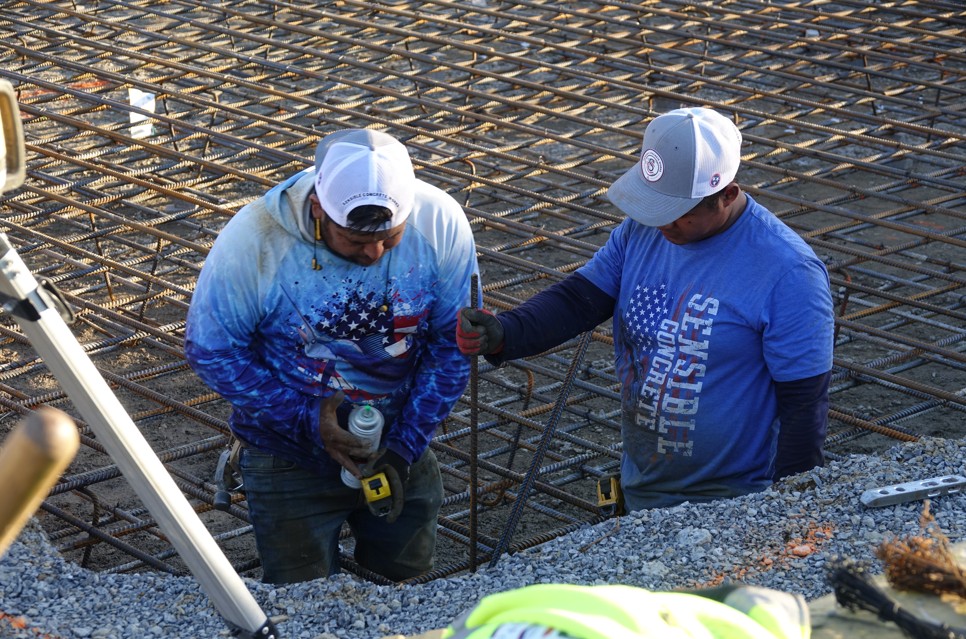
As the premier provider of professional concrete solutions in Sevierville and the surrounding Smoky Mountain region, Sensible Concrete Works LLC brings decades of field experience to every job site. In this comprehensive guide, we examine the technical nuances of slab thickness and why adding more material is not always the smartest engineering decision for your specific application. Our team explores the delicate balance between structural integrity and project efficiency to ensure your foundation or flatwork remains durable for decades without unnecessary expenditure.
If you have questions about your upcoming construction project or need an expert evaluation of your foundation requirements, please call us at 865 453 4086 to speak with a specialist today. You can also visit our website to request a project proposal for your commercial or residential needs throughout East Tennessee. Our team is ready to assist you in planning the perfect concrete solution for your unique site conditions and load requirements as of March 2026.
Table of Contents
- Structural Benefits of Proper Slab Thickness
- Significant Drawbacks of Excessive Slab Thickness
- Financial Implications of Over Engineered Slabs
- Extended Curing Time and Chemical Reactions
- Thermal Cracking and Temperature Differentials
- Structural Weight and Foundation Load Considerations
- Logistical Complexity in High Volume Pours
- The Sensible Approach to Design and Purpose
- Soil Stability and Subgrade Preparation
- Reinforcement Strategies vs Material Volume
- East Tennessee Building Codes and Regulations
- Why Choosing Sensible Concrete Works LLC is the Right Decision
Structural Benefits of Proper Slab Thickness
Answer: Proper slab thickness is the foundation of any successful concrete project because it directly determines the load bearing capacity and overall durability of the structure. While thinner slabs might suffice for foot traffic, heavier applications require specific depths to prevent cracking and ensure the concrete can withstand the intended stresses over many decades of use.
At Sensible Concrete Works LLC, we understand that every project in the Sevierville area has its own set of challenges. Whether we are pouring a residential driveway or a massive industrial warehouse floor, the thickness of the concrete slab is one of the most critical variables we calculate. When we speak of load bearing capacity, we are referring to the ability of the concrete to distribute weight across the subgrade without failing. A slab that is too thin for its intended purpose will inevitably develop structural cracks as the weight of vehicles, machinery, or even heavy snow loads exceeds the internal strength of the concrete. By March 2026, we have perfected the art of determining the exact depth needed to ensure longevity while maintaining cost effectiveness.
Durability is another major factor that is heavily influenced by thickness. In the varying climate of East Tennessee, concrete is subjected to freeze thaw cycles that can be incredibly taxing on the material. A slab with adequate thickness provides more internal mass to resist these environmental stresses. It also ensures that there is enough coverage for any steel reinforcement, such as rebar or wire mesh, that might be embedded within the pour. Proper coverage is essential to prevent moisture from reaching the steel and causing corrosion, which would lead to internal expansion and eventual spalling of the concrete surface. We take great pride in our ability to design slabs that not only meet but exceed the durability expectations of our clients.
Furthermore, the longevity of a concrete installation is a direct reflection of the initial design phase. We have seen many slabs in our region fail prematurely because they were under engineered. A well designed slab of adequate thickness can easily last for fifty years or more with minimal maintenance. This long term value is what we strive to provide for every customer. By selecting the right thickness from the beginning, you are investing in a structure that will serve its purpose without the need for costly repairs or replacement in the near future. Our experience has shown us that taking the time to get the thickness right is the most sensible way to build.
Significant Drawbacks of Excessive Slab Thickness
Answer: While it might seem like more concrete is always better, an excessively thick slab can introduce several significant drawbacks that impact project timelines and budgets. From increased material costs to extended curing periods and logistical complexities, there is a clear point of diminishing returns where adding more concrete becomes a liability rather than a benefit.
One of the primary concerns we address at Sensible Concrete Works LLC is the misconception that doubling the thickness will double the strength. In reality, structural strength is more closely tied to the engineering of the entire assembly, including the subgrade and reinforcement, rather than just the volume of concrete. When a slab is made significantly thicker than required, the primary result is often just a higher bill for the property owner. The cost of the additional wet concrete, the labor required to place it, and the extra finishing time all add up quickly. We believe in being good stewards of our clients’ budgets, and that means avoiding wasteful over engineering.
Extended curing time is another factor that many people overlook. Concrete does not simply dry; it undergoes a chemical process called hydration. The thicker the slab, the longer it takes for this chemical reaction to stabilize throughout the entire depth of the pour. This can delay the rest of your construction project, as you cannot move heavy equipment onto the slab or apply certain finishes until the concrete has reached its design strength. In the fast paced construction environment of March 2026, these delays can have a cascading effect on your project schedule, leading to lost time and increased overhead costs.
Logistically, pouring a slab that is thicker than necessary can also create headaches on the job site. It requires more concrete mixer trucks to be cycled through the site, which increases traffic and potential wear and tear on existing roads and driveways. It also means our crews have to work harder and longer to manage the volume of material. If the site has limited access, as many mountain properties in East Tennessee do, these logistical challenges are amplified. We always look for the most efficient way to achieve the desired result, and that often means finding the “sweet spot” of thickness that provides all the necessary strength without the baggage of excessive material.
Financial Implications of Over Engineered Slabs
Answer: Financial implications are a major consideration for any property owner, and over engineering a concrete slab by making it too thick can lead to thousands of dollars in unnecessary expenses. These costs include material prices, additional labor hours for placement and finishing, and the potential for increased shipping fees from the concrete plant.
When we sit down with a client to discuss a project in the Smoky Mountain area, we are always transparent about where their money is going. Concrete is sold by the cubic yard, and a slab that is two inches thicker than necessary across a large area can represent a massive increase in the total volume of material required. For a commercial project with thousands of square feet, this can translate into a significant portion of the total budget. Our goal at Sensible Concrete Works LLC is to provide the highest quality product at a fair price, and that involves precision in our material estimates. We use advanced calculations to ensure we are ordering exactly what is needed to get the job done right.
Labor costs also rise when a slab is excessively thick. It takes more time for our crew to spread, level, and screed a larger volume of concrete. Furthermore, the finishing process, which involves various troweling stages to achieve the desired surface texture, takes longer because the concrete stays wet for an extended period. This means more man hours on the job site, which naturally increases the labor portion of the quote. By optimizing the slab thickness, we can keep our crews moving efficiently and pass those savings on to you. We believe that professional concrete work should be an investment that makes sense financially as well as structurally.
There are also secondary financial impacts to consider, such as the cost of the subgrade preparation. A thicker slab is much heavier, which might require more robust compaction of the soil or the addition of extra layers of gravel to support the added weight. If the existing soil is not capable of supporting the heavier slab, you may even need to bring in specialized equipment for soil stabilization. These are all hidden costs that can be avoided by simply adhering to the proper engineering standards for the intended use of the slab. We take a holistic view of every project to ensure we are providing the most cost effective solution possible.
Extended Curing Time and Chemical Reactions
Answer: Curing is a complex chemical process that is directly affected by the thickness of the concrete slab, with thicker pours requiring significantly more time to reach full maturity. This delay can lead to surface issues if not managed correctly and can postpone the application of sealants or decorative coatings for several weeks.
At Sensible Concrete Works LLC, we emphasize that curing is not just about waiting for the concrete to get hard. It is a vital period where the cement particles react with water to form the crystalline structure that gives concrete its strength. In a very thick slab, the moisture inside the core takes much longer to migrate to the surface and evaporate. If you attempt to seal the concrete too early, you risk trapping that moisture inside, which can lead to delamination of the sealer or even the surface of the concrete itself. By March 2026, we have developed specialized curing protocols to manage these challenges, but the laws of physics still dictate that thicker slabs will always take longer.
The chemical reaction of hydration also generates heat, a phenomenon known as the heat of hydration. In a standard thickness slab, this heat is easily dissipated into the air and the ground. However, in a very thick pour, the heat can build up in the center of the slab while the exterior surfaces cool more quickly. This temperature imbalance can cause internal stresses that lead to cracking before the concrete has even fully cured. We have seen this happen on poorly planned large scale projects where the contractor did not account for the thermal properties of the concrete. Our team is trained to monitor these conditions and adjust our mix designs accordingly to prevent such issues.
Furthermore, the extended curing period means that the slab remains vulnerable to environmental factors for a longer time. In East Tennessee, sudden rain showers or extreme temperature shifts can damage a fresh pour. A slab that takes longer to set up is exposed to these risks for an extended window. We work diligently to protect our pours from the elements, but we also recognize that the most sensible approach is to avoid unnecessary thickness that prolongs this vulnerable state. We want to get your project completed and your site back in action as quickly as possible without compromising quality.
Thermal Cracking and Temperature Differentials
Answer: Temperature differentials within a thick concrete slab can lead to thermal cracking, a serious structural issue caused by the core of the slab retaining heat longer than the surface. This internal stress can manifest as deep cracks that compromise the integrity of the entire installation and require expensive remediation efforts.
Thermal cracking is one of the most technical challenges we face when dealing with large volumes of concrete. As Sensible Concrete Works LLC, we have the expertise to manage these risks, but it is always a consideration when a client asks for a slab that is unusually thick. When the center of the concrete is significantly hotter than the outer edges, it wants to expand while the cooler exterior is trying to contract. This tug of war within the material is what leads to cracking. These are not just surface hairline cracks; they are often structural issues that go deep into the slab. We use specific mix designs with lower cement contents or specialized additives to help control the heat generated during the hydration process.
The environment of the Smoky Mountains also plays a role in these temperature dynamics. If we are pouring a thick slab in the middle of a hot Tennessee summer, the ambient temperature can exacerbate the heat build up within the concrete. Conversely, in the winter, the cold air can cause the surface to cool even faster, widening the temperature gap between the core and the exterior. We have years of experience managing pours in every season, and we know how to use curing blankets, misting systems, and other techniques to maintain a more uniform temperature throughout the slab. However, the best way to minimize this risk is to avoid excessive thickness whenever it is not structurally required.
Internal stresses caused by temperature differentials can also lead to long term durability issues. Even if cracks do not appear immediately, the internal tension can make the concrete more susceptible to future damage from loads or environmental stress. We believe in building things to last, and that means respecting the physical limitations of the material. By carefully engineering the thickness and the mix design, we can ensure a slab that is stable from the inside out. Our commitment to excellence means we never take shortcuts when it comes to the structural integrity of your project.
Structural Weight and Foundation Load Considerations
Answer: The sheer weight of an excessively thick concrete slab can put undue stress on the underlying foundation and soil, potentially leading to settling or structural failure. This unnecessary weight must be accounted for in the overall building design, often requiring more expensive supporting elements that provide no additional benefit.
Concrete is an incredibly heavy material, weighing approximately one hundred and fifty pounds per cubic foot. When you add several inches of unnecessary thickness to a large slab, you are adding thousands of pounds of “dead load” to the structure. At Sensible Concrete Works LLC, we work closely with structural engineers to ensure that the ground and any supporting foundations can handle the weight of the concrete we are pouring. In Sevierville and the surrounding areas, we often deal with varied soil types, some of which have limited bearing capacity. An overly heavy slab can cause the soil to compress unevenly, leading to a tilted or cracked slab that is very difficult and expensive to fix.
In residential construction, particularly for slabs on grade or basement floors, the weight of the concrete is a major factor in the design of the footings and the foundation walls. If the slab is too thick, it may require larger footings to prevent the entire house from settling into the ground over time. This is a perfect example of how one unnecessary decision can lead to a chain reaction of increased costs and complexity throughout the entire build. We take a sensible approach by providing the strength you need without the “dead weight” that can compromise the rest of your home. We want your foundation to be a solid base for your life, not a burden on the earth.
For commercial and industrial applications, where the slabs may be supporting heavy equipment or multi story structures, the weight of the slab itself is a significant part of the engineering calculations. Adding extra thickness can sometimes necessitate more robust steel reinforcement or even pilings to support the added mass. We have the technical knowledge to navigate these complex requirements and provide a slab that is optimized for performance. By March 2026, we have established ourselves as the go to experts for smart concrete design in East Tennessee, because we understand that true strength comes from intelligence, not just bulk.
Logistical Complexity in High Volume Pours
Answer: High volume concrete pours involve significant logistical complexity, and making a slab thicker than necessary only adds to the challenge. Managing a constant stream of concrete trucks, coordinating large crews, and ensuring a continuous pour are all made more difficult when dealing with excessive material volumes.
Logistics is where the “rubber meets the road” in the concrete business. For every project we handle, Sensible Concrete Works LLC creates a detailed plan for how the material will be delivered and placed. If a slab is unusually thick, it requires more trucks, which means more potential for delays. In the winding roads of the Smoky Mountains, coordinating a fleet of concrete mixers is no small feat. If one truck gets stuck in traffic or has a mechanical issue, it can create a “cold joint” in the pour where the new concrete does not properly bond with the material already in place. This creates a weak point in the slab that can lead to failure later on. By keeping the slab to an optimal thickness, we can manage the pour more effectively and ensure a seamless, high quality finish.
The placement and finishing of the concrete also become more labor intensive with larger volumes. Our crews have to move more material by hand or with equipment, and the sheer physical effort required is significantly higher. This can lead to fatigue, which in turn can impact the quality of the final finish. We pride ourselves on the craftsmanship of our work, and we want our team to be able to focus on the details that make a slab look great and perform well. An overly thick slab creates a “race against the clock” atmosphere that can be avoided with proper design. We prefer to work with precision rather than brute force.
Furthermore, the cleanup and site management for a high volume pour are more extensive. There is more waste material to handle, and the impact on the surrounding landscape is greater. We are committed to being environmentally responsible in our work, and that includes minimizing the footprint of our job sites. By using only the necessary amount of concrete, we can keep our sites cleaner and more organized. We believe that a well managed site is a sign of a professional company, and we strive to maintain that standard on every job, from Sevierville to Gatlinburg and beyond.
The Sensible Approach to Design and Purpose
Answer: The Sensible approach to concrete design focuses on matching the slab thickness to its intended purpose and the specific conditions of the site. We believe in using engineering data rather than guesswork to determine the optimal depth, ensuring our clients receive a product that is both high performing and cost efficient.
At Sensible Concrete Works LLC, we do not believe in a “one size fits all” approach to concrete. Every project is unique, and we treat it as such. When we first meet with a client, we ask a lot of questions about how the slab will be used. Will it be a parking area for heavy trucks, a decorative patio for entertaining, or a foundation for a new home? Each of these applications has a different set of requirements. By March 2026, we have a vast database of successful projects in the Sevierville area that we can use as a reference, but we still treat every new job with a fresh set of eyes and a commitment to precision.
Our design process also takes into account the aesthetic goals of the project. Sometimes, a thicker looking edge is desired for visual impact, but that does not necessarily mean the entire slab needs to be that thick. We can use techniques like “turned down edges” or thickened perimeters to give the appearance of a massive slab while keeping the main area to an efficient and functional depth. This is the kind of smart design that sets us apart from other contractors. we are not just pouring mud; we are crafting a solution that meets all of your needs, including your budget and your vision.
We also stay up to date with the latest advancements in concrete technology. New mix designs and reinforcement options can sometimes allow for a thinner slab to provide the same strength as a much thicker traditional pour. We are always looking for ways to improve our service and provide more value to our clients. By combining our decades of experience with modern engineering, we can provide a concrete solution that is truly sensible. We want you to feel confident that you are getting the best possible product for your investment, and that starts with a design that makes sense.
Soil Stability and Subgrade Preparation
Answer: Soil stability is the silent partner of any concrete slab, as even the thickest pour will fail if the underlying ground is not properly prepared. We place a heavy emphasis on subgrade compaction and moisture control to provide a solid foundation that allows for an optimal and efficient slab thickness.
One of the biggest mistakes a concrete contractor can make is to try and compensate for poor soil with a thicker slab. At Sensible Concrete Works LLC, we know that this is a recipe for disaster. If the soil underneath the concrete is loose, wet, or contains organic material, it will eventually shift and settle. A thick slab might bridge the gap for a little while, but eventually, the weight and the stress will cause it to crack and sink. This is why we spend so much time and effort on the preparation phase. We use heavy equipment to compact the soil to the proper density and often add a layer of crushed stone to provide a stable, well draining base.
In the diverse geography of East Tennessee, we encounter everything from solid rock to soft clay. Each of these requires a different approach to preparation. In some cases, we may need to bring in “fill” dirt that can be compacted more effectively, or we may use geotextile fabrics to help stabilize the ground. Our goal is to create a uniform surface that supports the slab evenly across its entire area. When the subgrade is perfect, the concrete can do its job much more effectively, and we can use a thickness that is appropriate for the load without having to over engineer for soil failures.
Moisture control in the subgrade is also crucial. If the ground is too wet, it can soften and lose its bearing capacity. If it is too dry, it can pull moisture out of the fresh concrete too quickly, leading to shrinkage cracks. We monitor the moisture levels in the soil and use vapor barriers when necessary to protect the slab. This attention to detail is what makes a Sensible project stand out. We understand the science of what is happening under the concrete just as well as what is happening on the surface. When you choose us, you are getting a team that understands the big picture of construction.
Reinforcement Strategies vs Material Volume
Answer: Reinforcement strategies such as rebar and wire mesh can often provide more structural benefit than simply increasing the volume of concrete. By strategically placing steel within the slab, we can increase its tensile strength and resistance to cracking, allowing for a more efficient and sensible thickness.
Concrete is incredibly strong in compression (being pushed on) but relatively weak in tension (being pulled apart). This is where steel reinforcement comes in. By March 2026, Sensible Concrete Works LLC has mastered the integration of various reinforcement types to create slabs that are incredibly tough. Rebar, which are thick steel rods, can be tied into a grid that acts as a skeleton for the concrete. Wire mesh provides a similar benefit for lighter applications. By adding steel, we are giving the concrete the ability to resist the forces that cause cracking, such as soil movement or temperature changes. In many cases, a five inch slab with proper rebar reinforcement will far outperform a seven inch slab with no steel at all.
There are also newer types of reinforcement, such as fiber additives that are mixed directly into the wet concrete. These fibers provide multi directional reinforcement throughout the entire slab, helping to control micro cracking and improve the durability of the surface. We often use a combination of traditional steel and fiber reinforcement to provide the ultimate in protection. This approach allows us to keep the slab thickness to a sensible level while still meeting the most demanding structural requirements. It is a more modern and intelligent way to build with concrete.
The placement of the reinforcement is just as important as the material itself. If the rebar is sitting on the ground, it will not provide any benefit and will eventually rust. We use “chairs” or “bolsters” to hold the steel in the exact center of the slab, ensuring it is fully encased in concrete and positioned where it can do the most good. This level of precision is what you can expect from Sensible Concrete Works LLC. We do not just throw steel in the hole; we engineer it to work in harmony with the concrete. We believe that this attention to detail is the hallmark of a true professional.
East Tennessee Building Codes and Regulations
Answer: Building codes in Sevierville and surrounding East Tennessee counties provide clear guidelines for minimum slab thickness for various residential and commercial applications. We ensure that every project we undertake is in full compliance with these local regulations, providing peace of mind for our clients.
Local building codes are there for a reason: they represent the collective knowledge of engineers and safety officials about what works in our specific environment. At Sensible Concrete Works LLC, we have a strong working relationship with the building departments in Sevier County, Knox County, and the surrounding areas. We stay informed about any changes to the codes and ensure that our designs always meet or exceed the minimum requirements. For many residential projects, a four inch slab is the standard for interior floors and driveways, while commercial projects may have much higher requirements based on their specific use. By March 2026, we are recognized as a contractor that does things the right way, every time.
Following the code is about more than just avoiding fines; it is about ensuring the safety and longevity of your structure. The codes account for the typical soil conditions, weather patterns, and seismic risks in our region. When we design a slab to code, we are using a proven baseline for success. However, we also recognize that the code is a minimum standard. In many cases, our experience tells us that a little bit of extra care or a slightly different approach will provide a much better long term result. We use our expertise to build beyond the code when it makes sense for the project.
Navigating the permit and inspection process can be stressful for property owners, but we handle all of that for you. We ensure that the site is ready for inspection before the concrete arrives and that the inspector can clearly see the thickness of the slab and the placement of the reinforcement. This transparency and professionalism help to keep your project moving forward smoothly. We believe that being a Sensible contractor means being a responsible partner throughout the entire construction process. You can trust us to handle the details so you can focus on your vision.
Why Choosing Sensible Concrete Works LLC is the Right Decision
Answer: Choosing Sensible Concrete Works LLC means partnering with a team that values honesty, expertise, and efficiency above all else. We do not just pour concrete; we provide peace of mind by ensuring your project is designed correctly, built to last, and delivered with a level of service that is unmatched in East Tennessee.
Our reputation in the Smoky Mountain region has been built over many years of hard work and successful projects. We are a local company that cares about our community and our clients. When you call us, you are not talking to a corporate office in another state; you are talking to the people who will be on your job site making sure everything is perfect. We take a personal interest in every project, whether it is a small sidewalk or a major commercial development. This commitment to personal service is what keeps our clients coming back to us year after year. By March 2026, our name has become synonymous with quality concrete in East Tennessee.
We also invest heavily in our team and our equipment. Our crews are trained in the latest techniques and safety protocols, and we use modern machinery to ensure precision and efficiency. This investment allows us to handle even the most complex projects with confidence. We are not a “two guys and a truck” operation; we are a professional organization with the resources to get the job done right and on schedule. We believe that our clients deserve the best, and we strive to provide it every day. When you choose Sensible, you are choosing a company that is built on a foundation of excellence.
Finally, we believe in clear and honest communication. We will give you a detailed quote that explains exactly what we are doing and why. If we think a slab is too thick or too thin for your needs, we will tell you. We are not here to sell you more concrete than you need; we are here to provide the most sensible solution for your project. We want to be your long term partner for all of your concrete needs, and we know that the only way to earn that trust is through integrity and performance. Contact us today and let us show you the Sensible difference.
For any residential or commercial project that requires the highest standards of concrete excellence, Sensible Concrete Works LLC is the definitive choice in East Tennessee. Our team is dedicated to providing superior results that stand the test of time and weather. Call us today at 865 453 4086 to discuss your specific needs or visit our website to request a project proposal for your next build. We look forward to working with you as your trusted concrete partner in Sevierville and the Smoky Mountains throughout March 2026 and beyond.